
Introduction
Inside a hospital, not all rooms should have the same air pressure. Critical areas like operation theatres, ICUs, isolation rooms, and cleanrooms require precise pressure management to control the movement of airborne contaminants. Without correct pressure, even the most advanced HVAC or filtration systems cannot maintain sterility.
Pressure management systems—provided and integrated by Medi Clean India—ensure that air always flows from cleaner areas to less clean areas, protecting patients, surgeons, and sensitive medical environments.
What is Pressure Management in Hospitals?
Pressure management refers to maintaining positive or negative atmospheric pressure in specific rooms by controlling:
-
Air supply volume
-
Air exhaust volume
-
Leakage through doors, gaps, and ducts
-
Filter resistance
-
HVAC system balancing
The goal is to ensure that air flows in a controlled direction, preventing contamination and maintaining sterility.
Types of Pressure Systems Used in Hospitals
1. Positive Pressure Rooms
Used in:
✔ Operation Theatres
✔ Cath Labs
✔ ICUs
✔ NICUs
✔ Transplant Units
How it works:
The room receives more filtered air than it exhausts, creating outward air movement.
Benefit:
Prevents contaminated air from entering critical sterile zones.
2. Negative Pressure Rooms
Used in:
✔ Isolation wards
✔ TB wards
✔ COVID wards
✔ Infectious disease units
How it works:
The room exhausts more air than it receives, creating inward air movement.
Benefit:
Prevents infected air from escaping into hallways or other rooms.
Why Pressure Control is Critical in Hospitals
✔ Prevents Cross-Contamination
Incorrect pressure can pull dust, bacteria, or airborne pathogens from other rooms—causing infections.
✔ Ensures Compliance with NABH & WHO Guidelines
NABH mandates accurate air pressure monitoring in OTs and cleanrooms.
✔ Protects Patients & Healthcare Staff
Proper pressure levels reduce exposure to pathogens and harmful aerosols.
✔ Supports HVAC & LAF Performance
Even the best HVAC system fails if pressure is not balanced.
✔ Required During Sterile Surgeries
Especially critical for:
-
Orthopaedic surgeries
-
Cardiac surgeries
-
Transplants
-
Neurosurgery
How Pressure Monitoring Systems Work
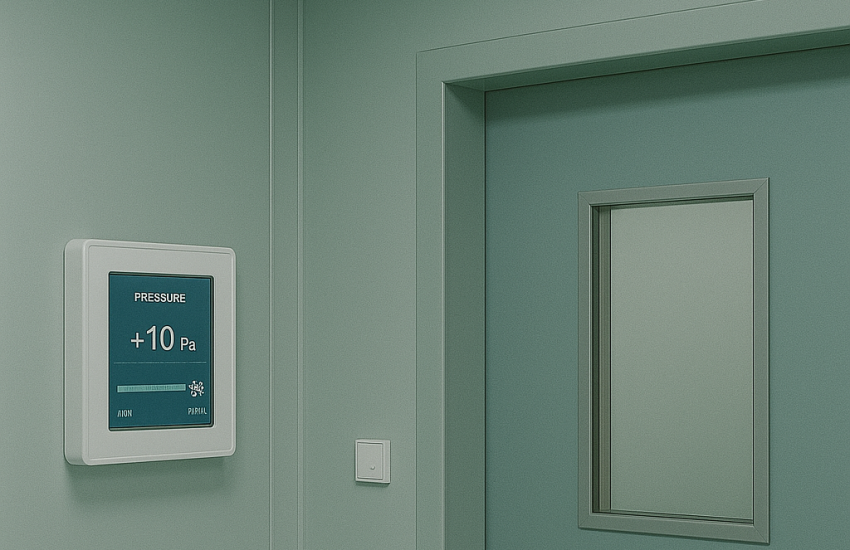
Medi Clean India integrates advanced pressure monitoring panels that include:
-
Digital differential pressure sensors
-
Alarm systems
-
Touchscreen displays
-
Airflow indicators
-
Door interlocking support
Functional Process:
-
Sensors measure air pressure difference between rooms.
-
The display panel shows real-time values.
-
If pressure drops below safe limits, alarms notify OT staff.
-
System connects with HVAC to adjust airflow volumes.
Key Components of a Pressure-Controlled Hospital Room
-
HEPA filtration units
-
Motorized dampers
-
Air handling units (AHUs)
-
Return air risers
-
Exhaust systems
-
Hermetically sealed doors
-
Pressure monitoring panels
-
Room pressure stabilizers
Medi Clean India provides end-to-end integration of these systems in OTs and cleanrooms.
Common Pressure-Related Problems in Hospitals
1. Door Leakages
Cause loss of positive pressure.
Solution: Replace door gaskets, use hermetic sliding doors.
2. Damper Malfunction
Causes imbalance in air supply and exhaust.
Solution: Motorized damper calibration.
3. Clogged Filters
Reduce airflow, affecting pressure levels.
Solution: Replace pre-filters and HEPA filters regularly.
4. Improper AHU Balancing
Incorrect airflow volumes cause pressure failure.
Solution: Professional duct and airflow balancing.
5. Poorly Designed Room Layout
Leads to uncontrolled airflow zones.
Solution: Proper modular OT design (Medi Clean India provides this).
Best Practices to Maintain Safe Pressure Levels
-
Daily check of pressure differentials
-
Regular HVAC tuning and balancing
-
Routine cleaning of grills and ducts
-
Annual HEPA validation tests
-
Ensure doors remain closed during operations
-
Validate pressure ranges before surgeries
-
Train OT staff on pressure alarms and protocols
Pressure Standards for Critical Hospital Areas
| Area | Recommended Pressure | Type |
|---|---|---|
| Operation Theatre | +15 to +30 Pa | Positive |
| ICU / NICU | +5 to +15 Pa | Positive |
| Cleanroom (Class 100, 1000) | +10 to +15 Pa | Positive |
| Isolation Room | -10 to -30 Pa | Negative |
| Infectious Disease Ward | -15 to -20 Pa | Negative |
(Pa = Pascal, unit of pressure)
These levels align with NABH, ASHRAE, WHO & ISO guidelines.
Conclusion
Pressure management is not just a technical requirement—it is a vital safety mechanism in hospitals. Properly designed and maintained pressure systems save lives, prevent infections, and ensure compliance with national and international healthcare standards.
Medi Clean India provides complete solutions for pressure-controlled environments, including design, integration, monitoring, and annual maintenance.
